Compound discipline
Material choices are tied to service media, temperature and mechanical loading.
Specification teams use Goodyear when elastomer performance, compound traceability and pneumatic or hydraulic reliability must be reviewed together before production release.
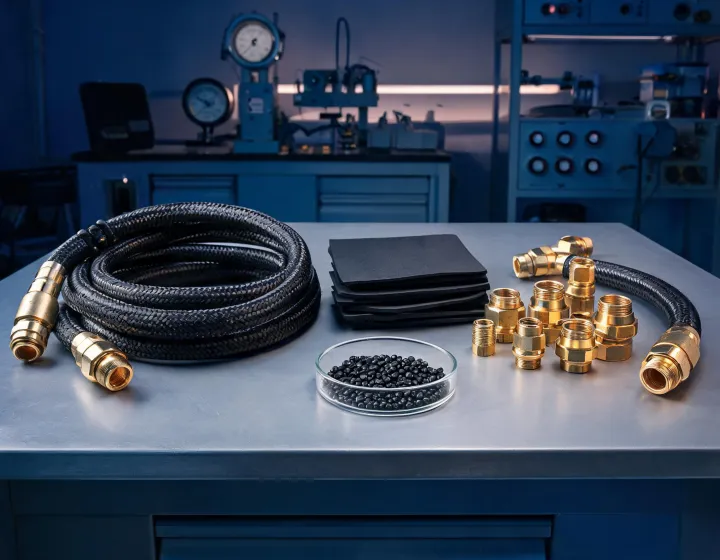
Each material family is framed by the conditions purchasing, quality and plant engineering teams normally validate before they release a rubber or polymer program.
Material choices are tied to service media, temperature and mechanical loading.
Rubber goods, polymers and hose systems can be specified in one review.
Batch documentation supports repeat production and quality investigations.
Engineers evaluate drawings, usage cycles and failure modes before quoting.
Programs can be planned for multi-region plants and distributor networks.
Qualification criteria are translated into practical incoming inspection data.
Process control expectations are mapped to supplier qualification packages and corrective action workflows.
For mobility and equipment programs, PPAP-style evidence, material declarations and change notices can be prepared.
Hardness, tensile, elongation, abrasion, compression set and aging tests are referenced in plain engineering language.
Regulatory screens help purchasing teams manage restricted substances and customer compliance questionnaires.
“The useful part was not just the hose recommendation. Goodyear helped us connect pressure, bend radius and coupling retention into one purchasing spec.”
Maintenance Engineering LeadFood processing equipment integrator“Their polymer review made our drawing discussion shorter because the team translated resin behavior into tooling and inspection consequences.”
Commodity ManagerIndustrial molded parts program“We needed a rubber supplier who would speak in test methods, not slogans. The documentation package gave our customer enough evidence to approve the change.”
Quality DirectorOEM replacement component supplierGoodyear can evaluate drawings, media exposure, pressure range, compound expectations and documentation requirements before a formal quote is issued.
Start Technical Review